
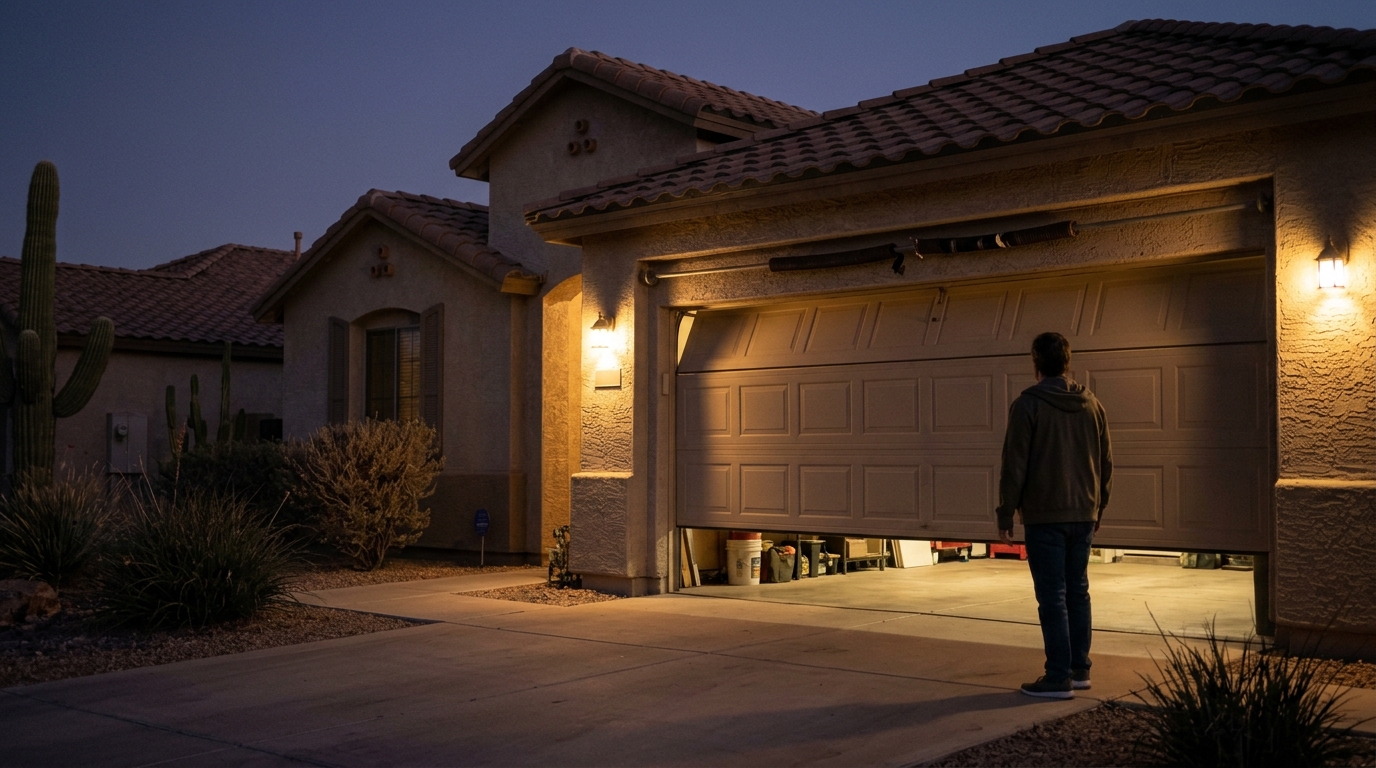
A broken garage door spring is a high-tension mechanical failure that renders the door extremely heavy and dangerous to operate. Before calling for emergency service in Queen Creek, you must disconnect the opener and secure the door in the closed position to prevent injury. GOGO Garage Door Service provides same-day and emergency response for these critical failures across the Phoenix metro area.
Immediate Safety Protocols
The moment you hear a loud bang or notice the door will not lift, stop using the remote or wall switch immediately. A garage door spring is a torsion or extension mechanism that stores significant potential energy. When it snaps, the door loses its counterbalance and becomes a heavy, uncontrolled weight. Attempting to force the door open manually can cause severe injury or further damage to the tracks and cables.
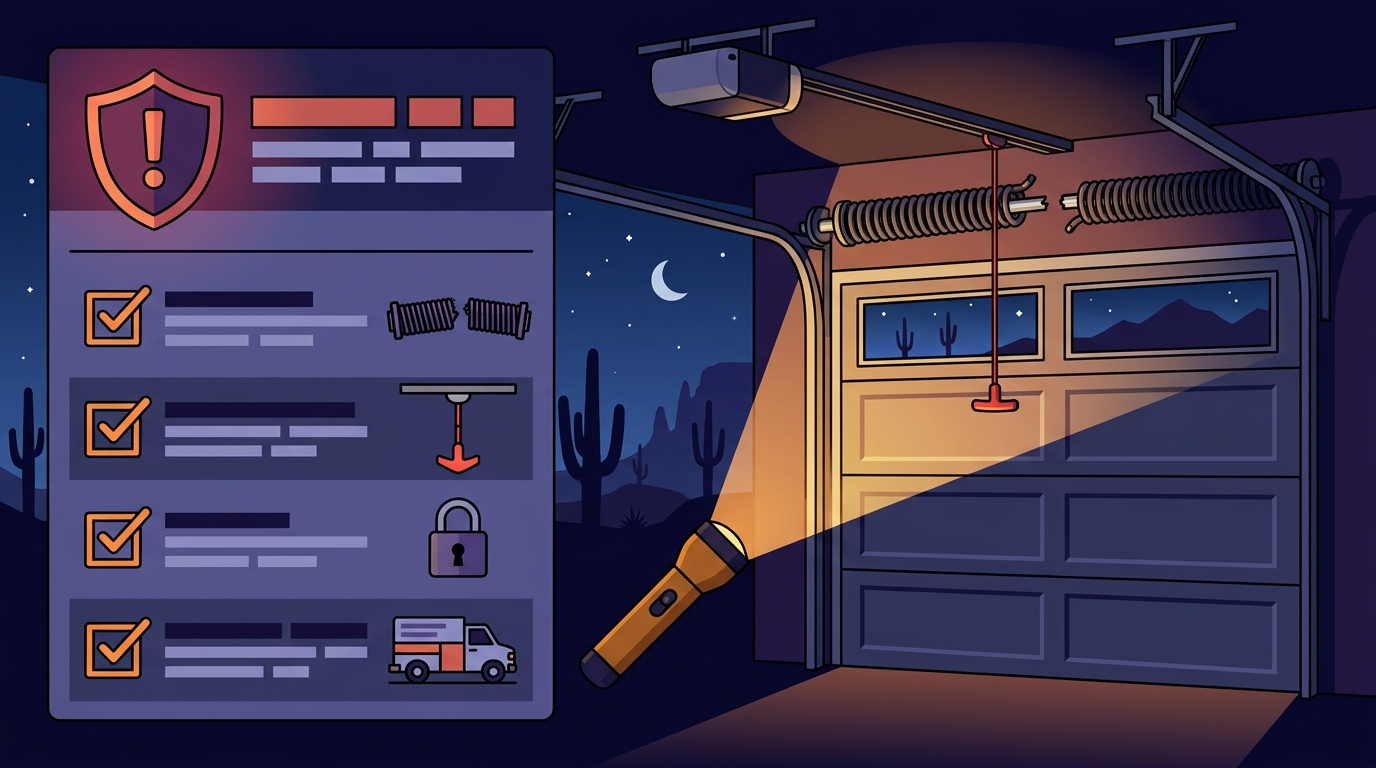
Your first action is to disconnect the automatic opener. Most units have a red cord or release handle that disengages the trolley from the door. Once disconnected, manually lower the door to the floor if it is partially open. If the door is already closed, leave it there. Do not attempt to lift it. This simple step protects you and preserves the remaining components of the system.
Identifying the Type of Spring Failure
Understanding which spring broke helps you communicate effectively with the technician. There are two primary types: torsion springs and extension springs. A torsion spring is a long, coiled metal rod mounted horizontally above the closed door. An extension spring is a shorter, thicker coil mounted on the horizontal tracks on either side of the door.
If you see a gap in the coils of the horizontal spring above the door, you have a broken torsion spring. If you see a spring hanging loosely on the side track, you have a broken extension spring. Torsion springs are generally safer to inspect from a distance because they are mounted high up. Extension springs are more dangerous because they are at head height and can snap with less warning. Note the type when you call for service.
Why DIY Repair Is Dangerous
Many homeowners assume they can replace a spring with a basic tool kit. This is a critical error. Garage door springs are rated for thousands of pounds of tension. A torsion spring, for example, is wound under extreme pressure. If a spring breaks while you are attempting to replace it, the stored energy can launch the metal coils like a projectile. This has caused serious eye injuries and lacerations to untrained individuals.
Professional technicians use specialized winding bars and safety clamps to control the tension safely. They also replace springs in pairs. If one spring breaks, the other is likely near the end of its life. Replacing only one spring creates an imbalance that will break the remaining spring soon. GOGO Garage Door Service technicians are trained to handle these high-tension components with the proper safety equipment.
Nighttime Service and Emergency Response
Spring failures often happen at night when the garage is in use. This is inconvenient, but it is also a safety risk. A door that is stuck open or partially open leaves your home vulnerable to intrusion. It also allows heat, dust, and pests to enter your garage. In Queen Creek, where temperatures can fluctuate significantly, an unsealed garage can affect your home's energy efficiency.
When calling for emergency service, be prepared to describe the exact symptoms. Mention if you heard a bang, if the door is crooked, or if the opener is making grinding noises. GOGO Garage Door Service offers prompt response times for emergency calls in the Queen Creek and surrounding Pinal County areas. They prioritize safety and will guide you through any immediate steps needed to secure the door until they arrive.
Preventing Future Spring Failures
Garage door springs are wear items. They are rated for a specific number of cycles, typically between 10,000 and 15,000 open-and-close operations. If you use your garage door twice a day, a spring may last 10 to 15 years. However, Arizona's heat and dust can accelerate wear. Regular maintenance can extend the life of your springs and prevent sudden, unexpected failures.
Schedule a professional inspection annually. A technician can check the tension, lubricate the moving parts, and inspect the cables and rollers. If you notice the door becoming heavier to lift or making unusual noises, do not wait. These are early signs of spring fatigue. Proactive maintenance is far less expensive and less dangerous than emergency repair.
Key Takeaways
- Stop using the garage door immediately if you suspect a spring has broken.
- Disconnect the automatic opener to prevent motor damage and injury.
- Do not attempt to lift the door manually; it is extremely heavy without the spring counterbalance.
- Identify whether you have a torsion or extension spring to help the technician prepare.
- Never attempt to replace a garage door spring yourself due to high-tension risks.
- Replace springs in pairs to maintain balance and prevent immediate re-failure.
- Contact a licensed local provider for emergency service in Queen Creek.
Frequently Asked Questions
Is it safe to leave a garage door open if the spring is broken?
No, it is not safe. An open garage door leaves your home vulnerable to security risks and allows weather elements to enter. If the door is stuck open, try to manually lower it after disconnecting the opener. If you cannot lower it safely, call for emergency service to secure the area.
How long does it take to replace a broken garage door spring?
A professional spring replacement typically takes between 30 and 60 minutes. The exact time depends on the type of spring and the condition of the other components. Technicians often replace both springs at once to ensure the door remains balanced.
Can I use the garage door manually if the spring is broken?
You can lift the door manually, but it will be very heavy. A standard residential garage door can weigh between 150 and 300 pounds. Lifting it without the spring counterbalance is difficult and dangerous. It is best to leave the door closed until a professional arrives.
Why do garage door springs break in pairs?
Most residential garage doors use two springs to share the load. If one spring breaks, the other spring must support the entire weight of the door. This extra stress often causes the second spring to fail shortly after the first. Replacing both springs at the same time prevents this chain reaction.
What should I tell the technician when I call for emergency service?
Describe the sound you heard, the position of the door, and the type of spring if you can see it. Mention if the opener is making noises or if the door is crooked. This information helps the technician bring the correct parts and tools to your home in Queen Creek. Learn more: Customer Reviews What Our.